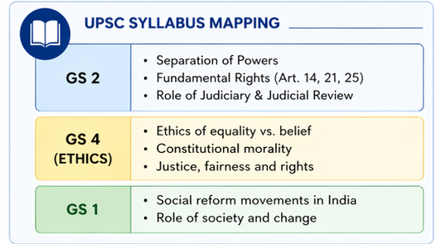
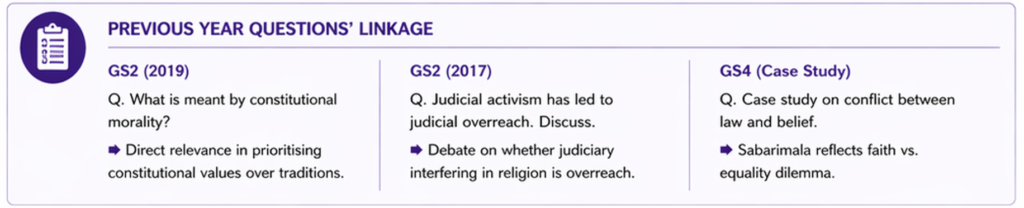
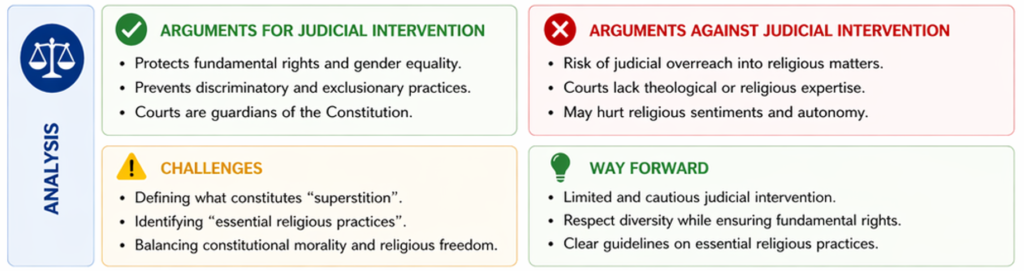
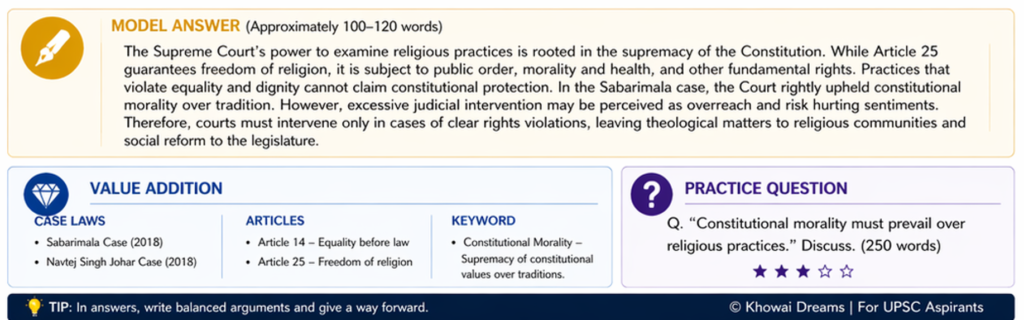
During hearings on review petitions related to the Sabarimala issue, the Supreme Court of India observed that it has the authority to examine whether a religious practice is based on superstition and whether it conforms to constitutional principles. The Court rejected the Centre’s argument that the legislature has the final say on such matters, emphasizing that judicial review remains essential to test practices against fundamental rights. It also raised questions about whether non-devotees can file petitions challenging religious customs, bringing in the issue of locus standi. The bench indicated that while it can assess the constitutional validity of practices, broader reforms may fall within the domain of the legislature.